




Mitigation means one thing: keeping the damage from getting any bigger. Do not confuse it with rebuilding. It is everything done before the repair to protect what is still sound. In Pueblo, our team handles mitigation by controlling the source, removing the water, containing the wet area and stabilizing the structure. Done well, it shrinks the repair that follows and sometimes removes the need for one.
The words mitigation and restoration get used as if they were interchangeable. Each is its own phase of the job. During mitigation, the urgent part, the loss is halted, its spread is limited and the home is made stable. Afterward comes restoration, when dryness is verified and ruined flooring, drywall and finishes get fixed or rebuilt. Because an insurer lists each one separately as well, knowing where you stand in the process is helpful.
On a standard mitigation call we work through four items. First is source control, which keeps more water from coming in. Second is extraction, to clear out standing water. Third is containment, where controlled airflow and plastic barriers keep contaminants and moisture away from clean rooms. Fourth is stabilization: unsalvageable materials come out, surfaces receive antimicrobial treatment, and dehumidifiers and air movers are placed. Along the way, your belongings and furniture get moved or set up on blocks to keep them safe.
Maintenance Tips for Water Damage Mitigation
A little prevention goes a long way in avoiding expensive restoration emergencies. Here are our expert recommendations:
- Roof penetrations, door frames and window edges should be sealed ahead of the next big storm.
- Keep gutters clear and downspouts pointed away from the foundation of the house.
- Learn where your main shutoff is and confirm the valve still turns.
- Install an automatic shutoff valve that closes the main when a leak is detected.
- Braided steel supply lines should take the place of rubber ones on the washing machine about every five years.
- Never switch the furnace fully off in freezing weather, since pipes can freeze and split.
Water Damage Mitigation Issues? We Can Help.
Get a free estimate from our expert team today.
Call (812) 494-4655 NowShould You DIY or Call a Pro?
Some simple tasks are suitable for DIY, but most water damage work benefits from professional tools, training, and experience. Here's a comparison:
| Factor | DIY Approach | Professional Service |
|---|---|---|
| Contaminated water | Household bleach where you can see | Category-specific antimicrobial applied |
| Containment | Closed doors and towels | Sealed barriers and controlled airflow |
| Proof for insurer | A few phone photos | Dated images and daily meter logs |
| What stays or goes | Guess what can be saved | Readings decide what stays or goes |
| Drying check | Dry when it feels dry | Each visit measured, not guessed |
Signs You Need Water Damage Mitigation in Pueblo
Catching these issues early helps you avoid costly problems and protect your property. Watch for these telltale signs that professional help is needed:
- Underfoot the carpet is spongy because the padding below holds water.
- Wet materials have sat for a day and a musty smell is starting.
- Bathroom or kitchen cabinets are sitting over water that cannot be reached to dry.
- Following a water loss, indoor air stays damp and condensation forms on the glass.
- Flooring is carrying moisture past the doorway to an adjoining room.
- Plumbing repairs are done, but no one has addressed what got wet.
- The insurance company instructed you to take reasonable action against further damage.
Early Action Saves Money
What seems like a minor issue today can turn into a major expense tomorrow. If you notice any of these signs, contact Pueblo Restoration at (812) 494-4655 for a prompt evaluation.
Water Damage Mitigation FAQ
Questions About Water Damage Mitigation?
We provide honest advice and free estimates on all water damage mitigation work.
Get Help: (812) 494-4655How We Handle Water Damage Mitigation
Our systematic approach delivers quality results on every project. Here's what you can expect when you choose Pueblo Restoration:
Control the Source
We shut off the supply, cap the failed line, or tarp and board the opening where water is entering. When the permanent repair calls for a roofer or plumber, we help schedule it.
Remove Standing Water
We extract standing water using pumps and extraction units, then check carpet and its padding. Fast removal of bulk water limits damage more than drying equipment could by itself.
Set Up Containment
We isolate the affected rooms from the rest through airflow control and plastic barriers. This keeps humidity, dust and any contaminants from travelling through the house while work is under way.
Stabilize the Structure
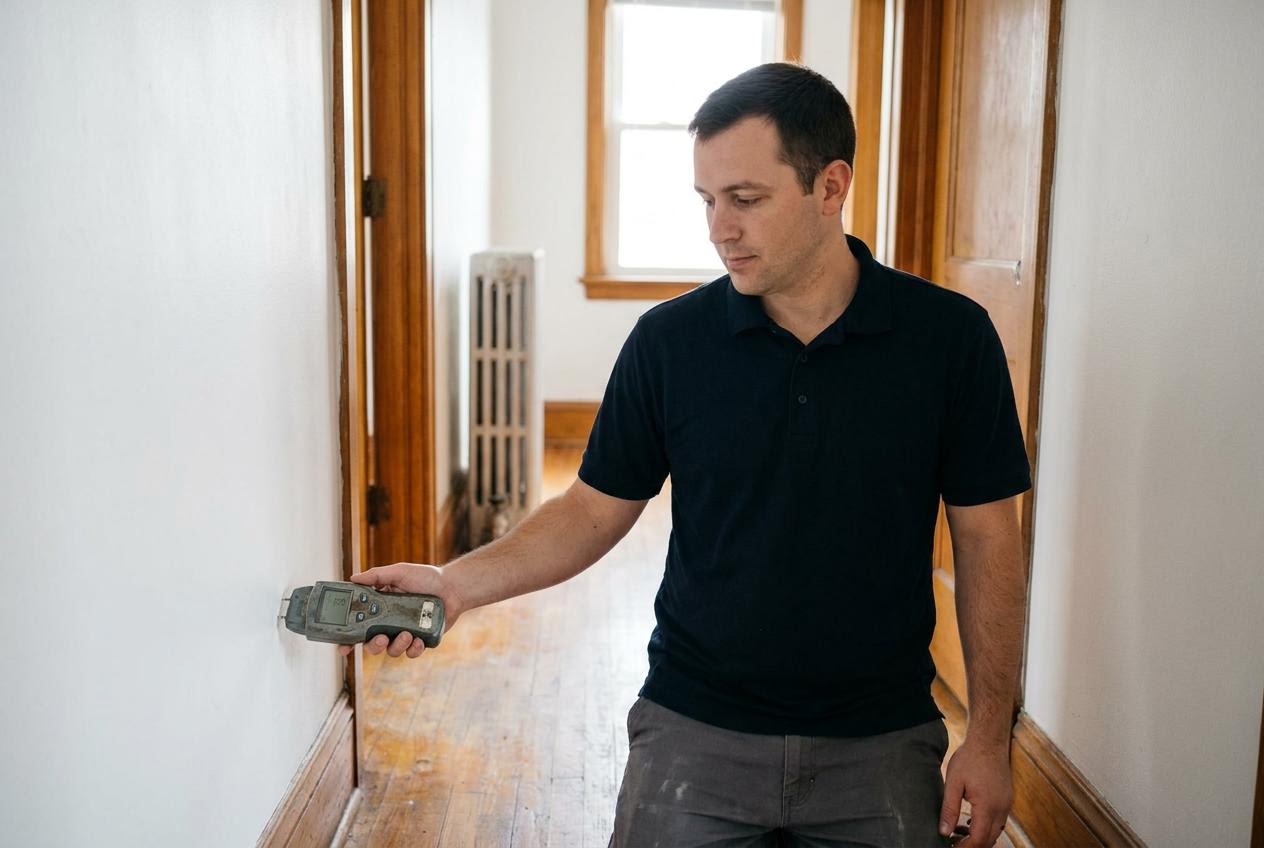
We remove what cannot be saved, treat surfaces with antimicrobial, and place dehumidifiers and air movers. Each visit includes logged moisture readings, and the structure is usually ready for repair work within 3 to 5 days.
Why Water Damage Mitigation Is Not a DIY Job
Mitigation is a series of judgment calls made quickly. What drywall stays and dries where it is, and what must be removed? Which category applies, 1, 2 or 3, and did that change after the leak first began? Should the toe kick under the cabinets be pulled? We answer those questions with training and moisture readings rather than by the look or feel of a surface.
Good mitigation also protects your claim. Owners are required by most policies to take reasonable steps against further damage, and the insurer will ask for evidence. Arrival photos, daily moisture readings and an inventory of removed materials all go into our records. Together those records show the water's effect and our response to it. Whoever handles repairs then begins from a known condition, and nothing wet ends up sealed behind new wallboard.
Get Water Damage Mitigation Help Today
Don't let water damage problems get worse. Call Pueblo Restoration now for prompt, professional service.
Call (812) 494-4655 Today